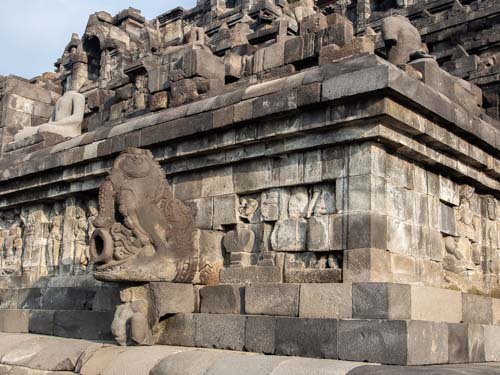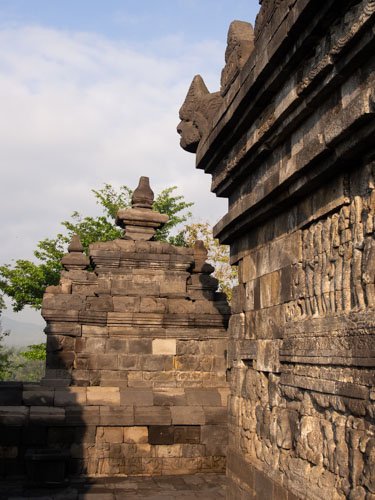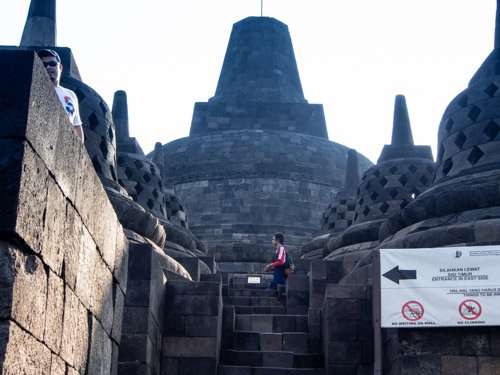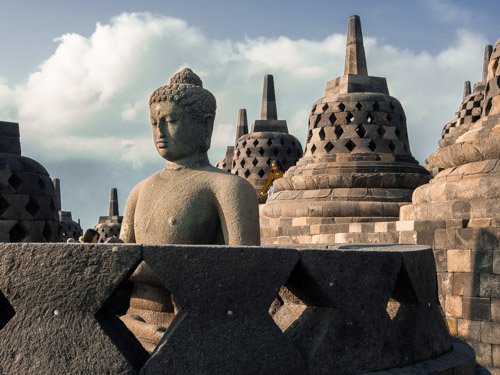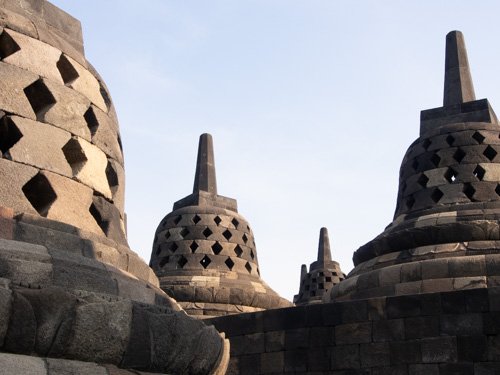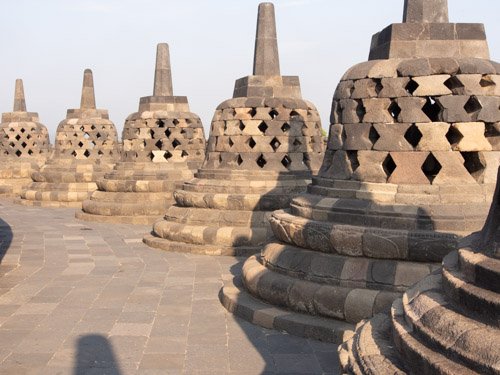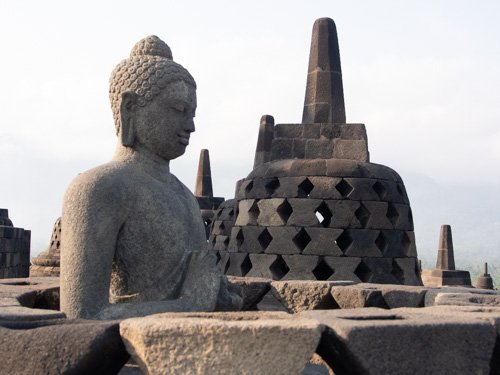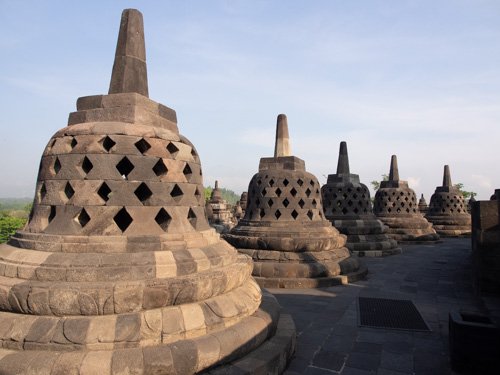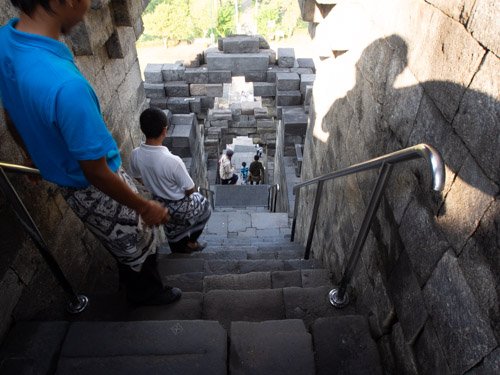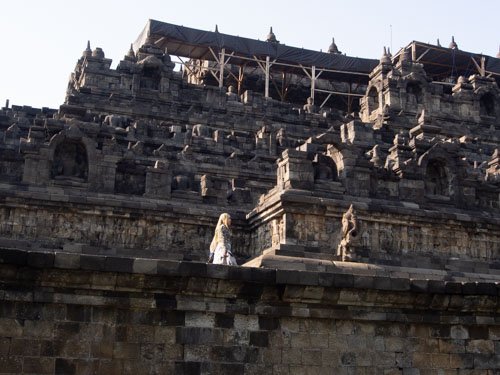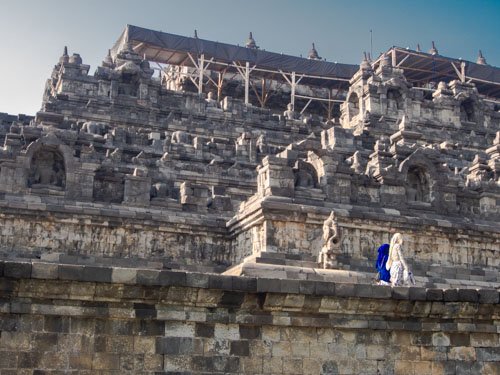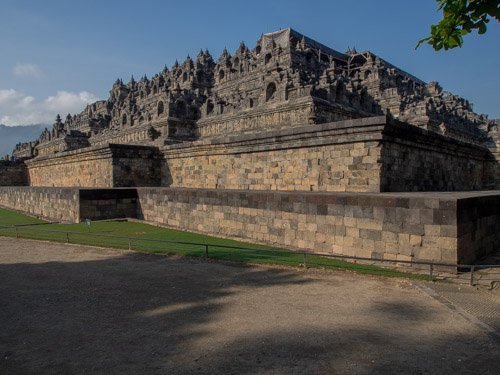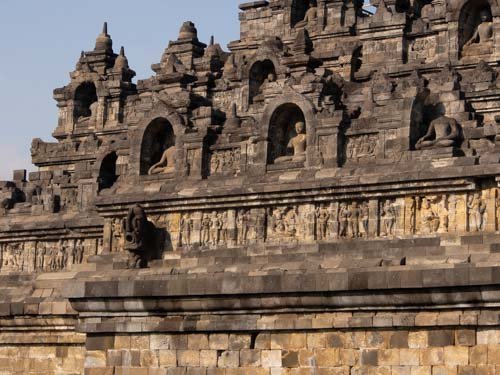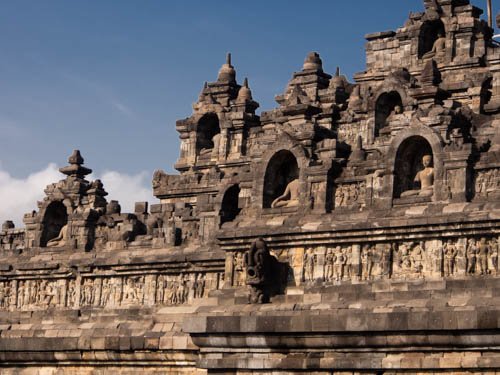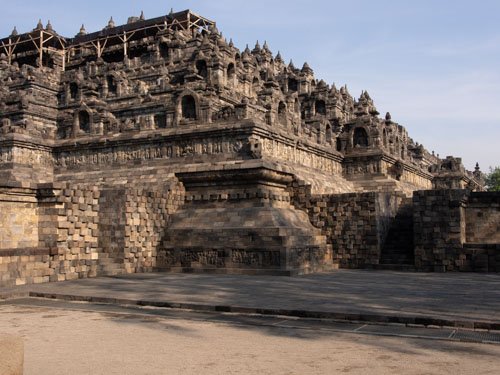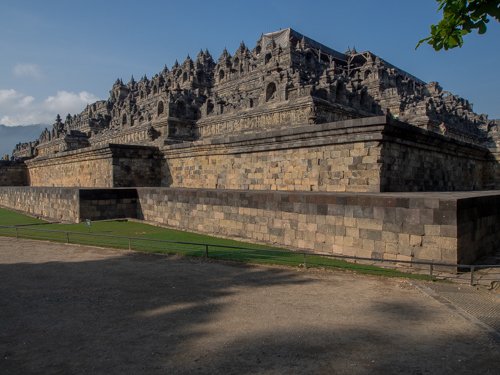
We traveled to Java, Indonesia in 2012. Borobudur was a highlight of the trip. Now that I am a practicing Buddhist, I have a deeper appreciation for this amazing monument to the Buddha. It was built about 200 years before Angkor Wat.
Not much is known about this monument other than what can be seen there now. There are no written records remaining explaining who built it or why it was built. However much has been uncovered from inscriptions. The Sailendra family favored Buddhism. They ruled Central Java between about 780 to 832 (Miksic, 2010). However it’s possible it was built before then in around 750 AD (Wickert, 1992). The name Borobudur may come from 2 Sanskrit words meaning “Complex of Temples on th Hill.”
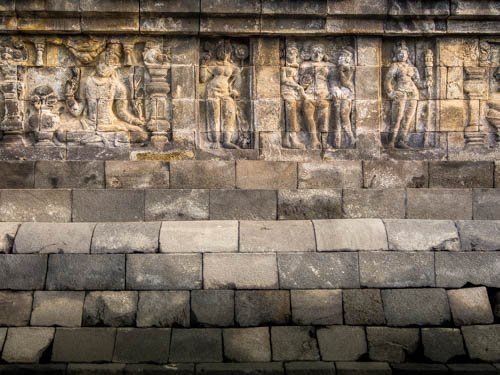
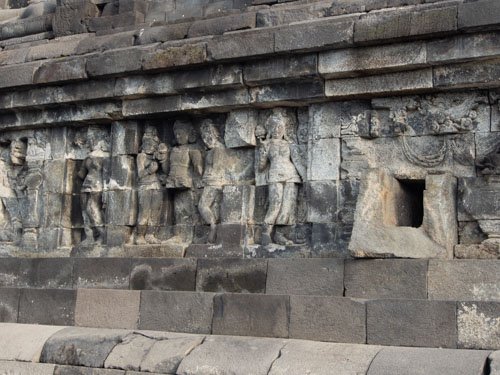
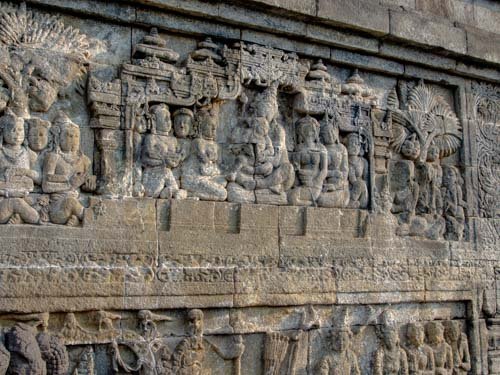
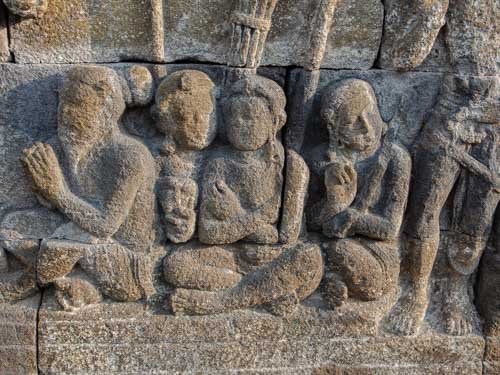
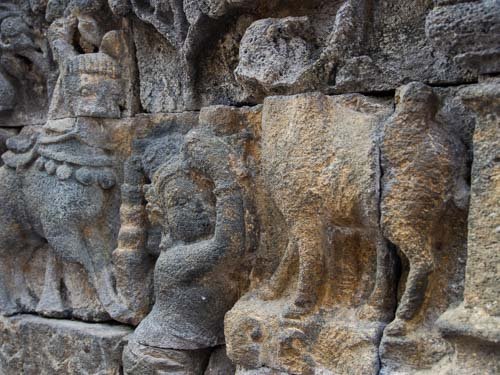
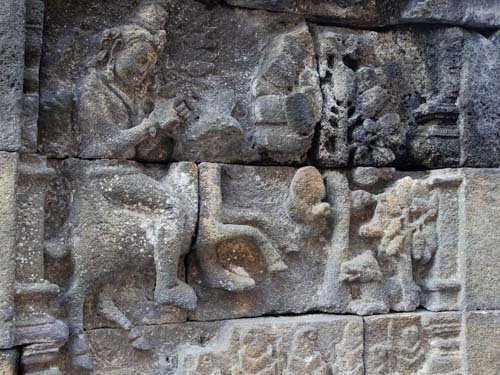
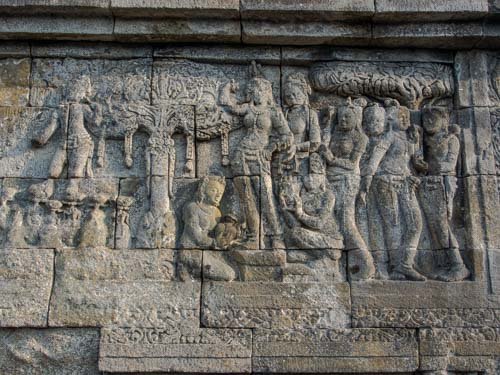
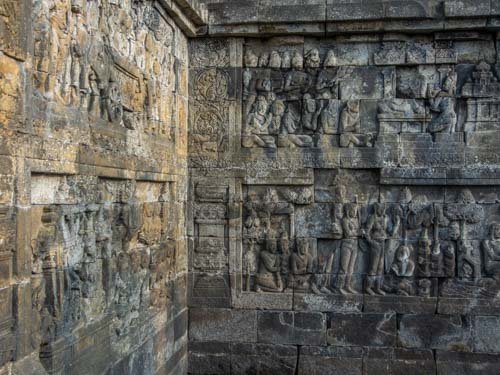
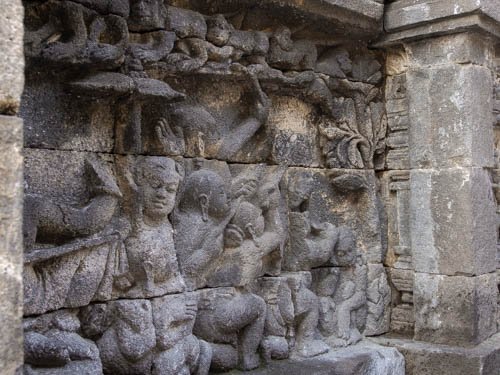
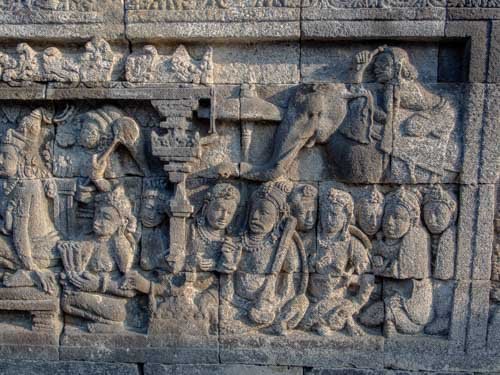
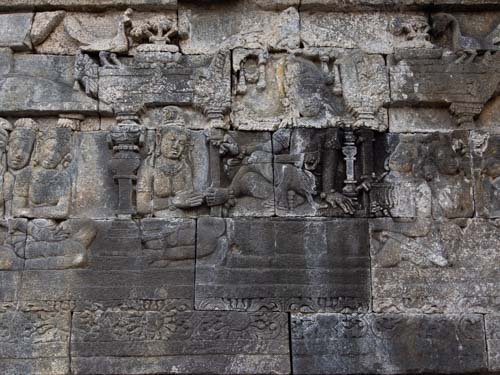
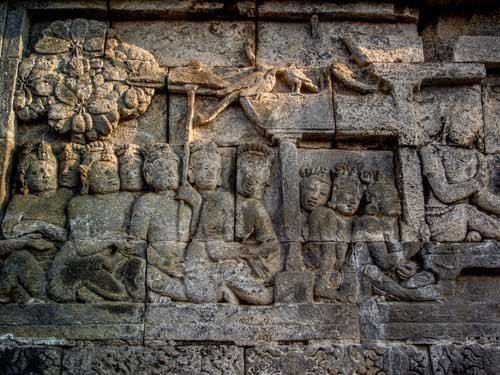
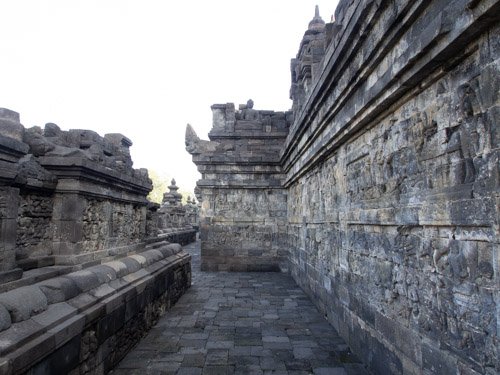
Buddhism was flourishing in Java at this time. Two major kingdoms governed Java. One was later known as Mataram, the other Srivijya in Southern Sumatra. Both kingdoms traveled (sailed) to China and India carrying passengers including Buddhist monks. Chinese travelers went to India to procure Buddhist scriptures (Miksic, 2010). Buddhism was thriving in SE Asia at this time. Many forms of Buddhism were present, with Mahayana and Theravada present. The Javanese called believers in Buddhism sogata, search for enlightenment assisted by Bodhisattvas. The reliefs of the upper 3 galleries depict the activities of Bodhisattvas.
Indonesia reclaimed control of Borobudur in 1948, taking it from Raffles and others including Van Erp who worked on restoration beginning at the turn of the century. With the help of UNESCO they began a major restoration project in 1971 as part of President Suharto”s Five Year Plan created in 1969.
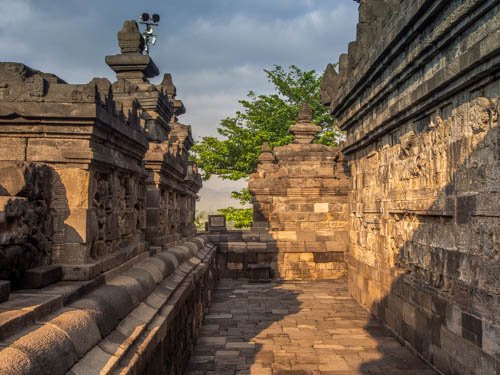
The galleries bearing the reliefs were completely disassembled in order to install a drainage system with lead sheets inserted between the stones to prevent water damage. All the stones were cleaned, treated and replaced (170,000 of them). It reopened in February 1983 making it one of the best preserve ancient monuments standing today.
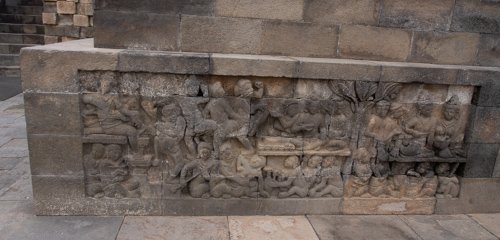
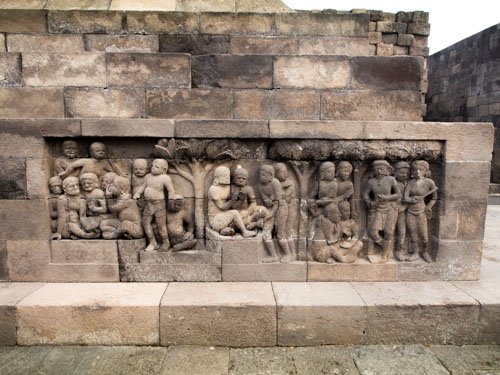
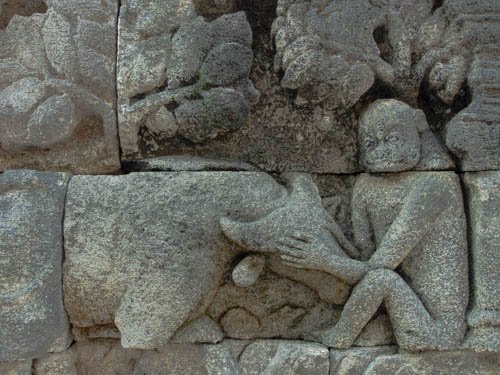
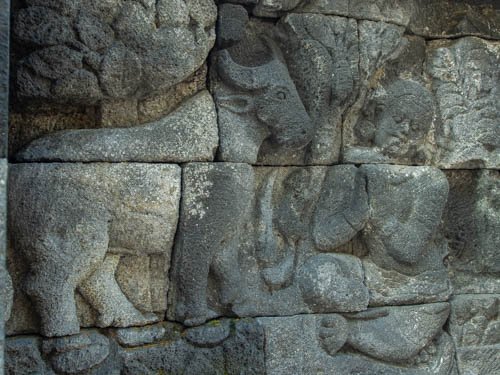
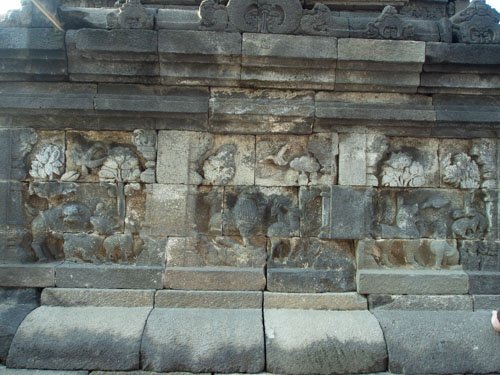
The essence of Indonesian Buddhism was the search for enlightenment assisted by bodhisattvas (Mahayana). The reliefs at the bottom are of ordinary life and dukkha and progress in the upper levels to showing scenes of the Buddha’s previous lives (Jataka stories) and representations of bodhisattvas. Borobudur may symbolize the 10 stages through which a practitioner ascends to enlightenment as they progress up the “mountain.”
References
My reference to the material presented here is from 3 books, Borobudur: Majestic Mysterious Magnificent by John Miksic & others, 2010, Borobudur: Golden Tales of the Buddhas also by John Miksic, 1990, and Borobudur by Jurgen D. Wickert, 1992.