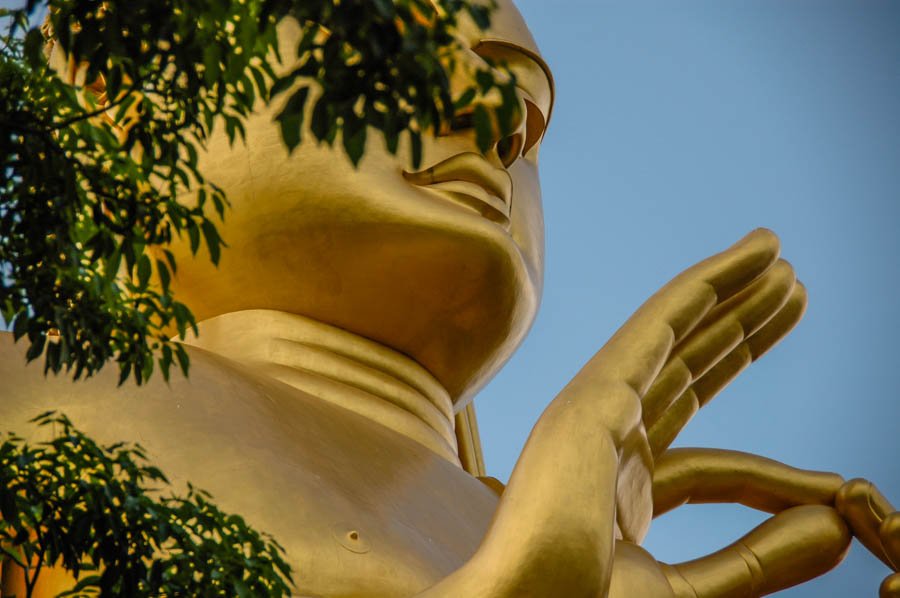
We arrived at the Dambulla Cave Temples in the late afternoon. Our driver, Aslam, introduced us to our guide, a middle aged wiry Sri Lankan, who we quickly learned possessed a passionate wealth of knowledge about Buddhism and the Cave Temples.
I had my camera and tripod because I wanted to get good pictures of the amazing Buddhist artwork in the caves. I had no idea we were also going to learn so much from our guide. He was insistent, as a good teacher would be, that I pay full attention to him before shooting photographs. I was happy to oblige.
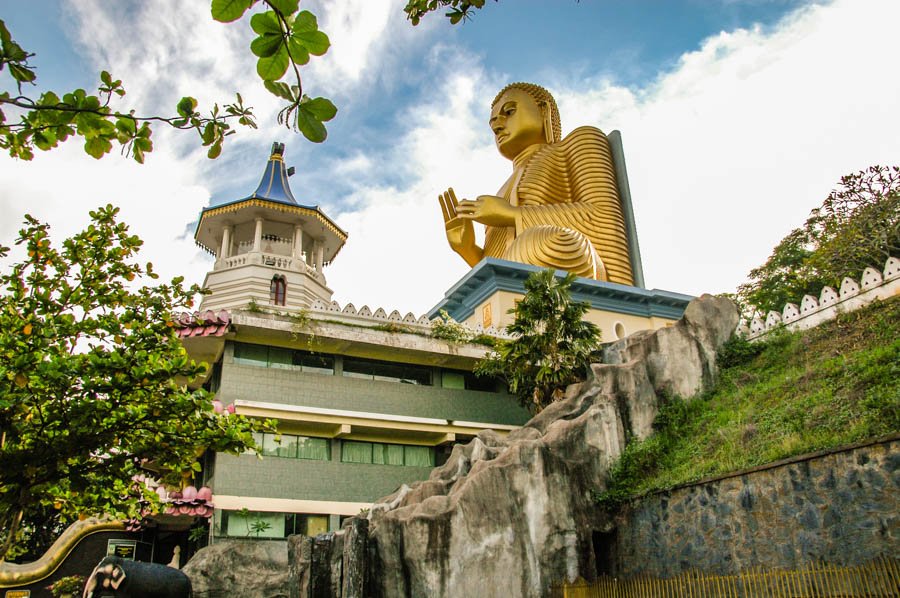
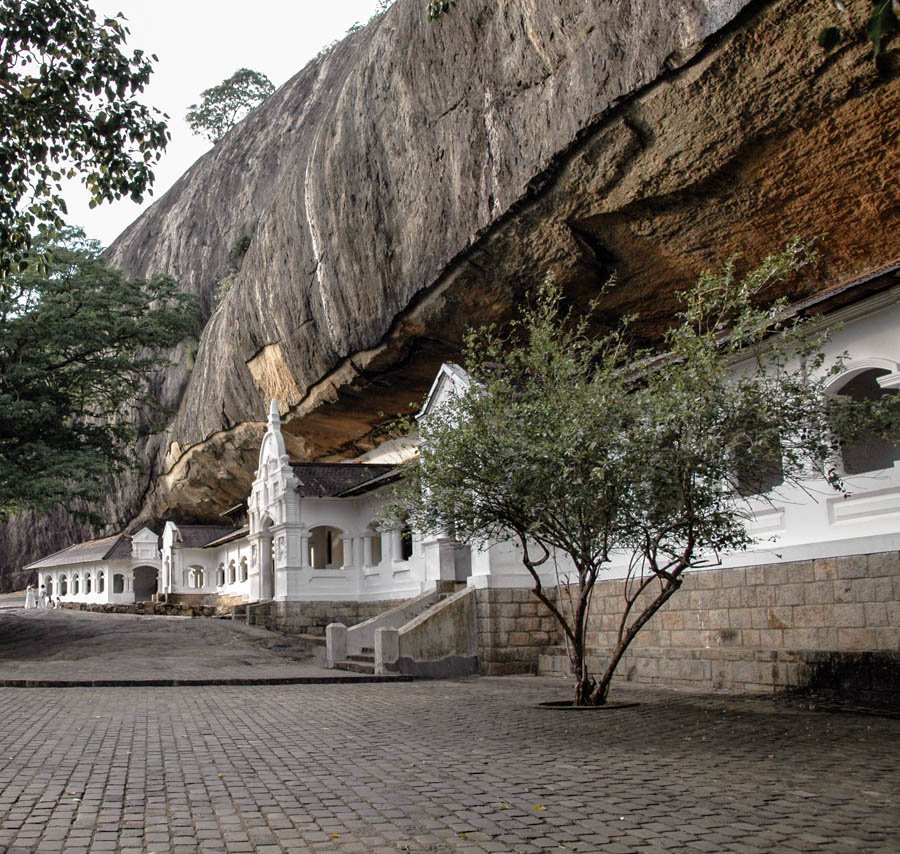

Dambulla Cave Temples is one of the largest cave temple complexes in SE Asia. It is also well visited as a pilgrimage site. In one cave our guide asked, “why do you think there are so many Buddhas side by side lining the walls of this cave?” It’s very simple. This is so that there are plenty of Buddhas for the pilgrims to pray to. While it was nice to be there when it wasn’t very crowded, being witness to hundreds of pilgrims would have been an amazing experience.
Our guide spoke emphatically of Buddhism being a philosophy rather than a religion with the most important message being the teaching of meditation or “no mind.” Everywhere in the caves are Buddha images in meditation. I felt at peace just being in the presence of such quiet meditative wisdom. Not only that, but the artistry on the walls and ceilings of the caves was captivating. All of my senses were alive with the wonder of it all.




Background and History
The cave temples, otherwise known as the Golden Mountain Temple, are located in central Sri Lanka. According to UNESCO, around the 3rd century BC, this area became the location for the largest Buddhist monastic settlements on the island of Sri Lanka.
There are 5 caves with the Maharaja Vihara being the oldest and most architecturally significant. A vihara was an early Sanskrit word for Buddhist dwelling, which took on greater meaning as time went on. Caves 1, 2 and 4 where built in the 1st century BC. The 3rd cave was built during the reign of Kirti Srirajasimha, the King of Kandy, in the 18th century and the 5th is the newest, repainted in 1915.
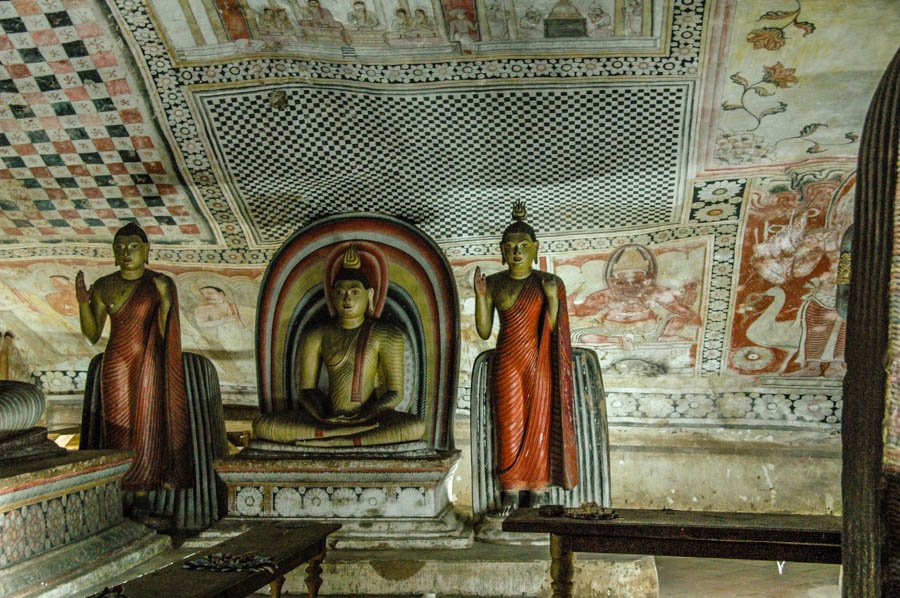
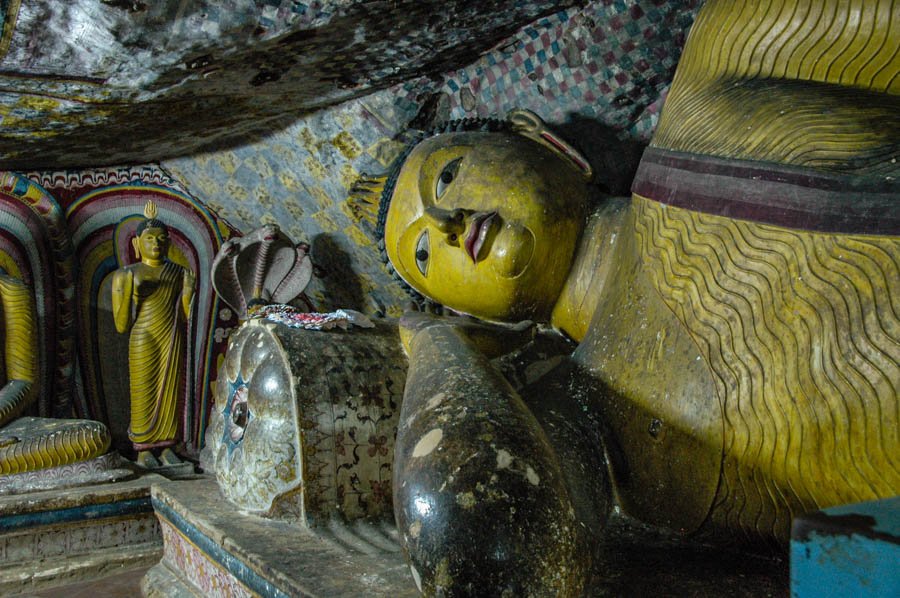
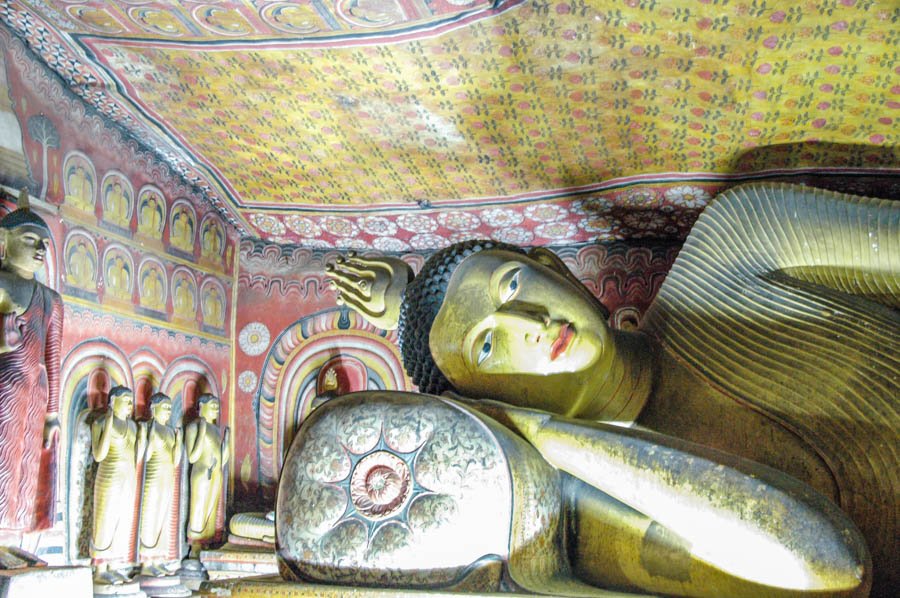
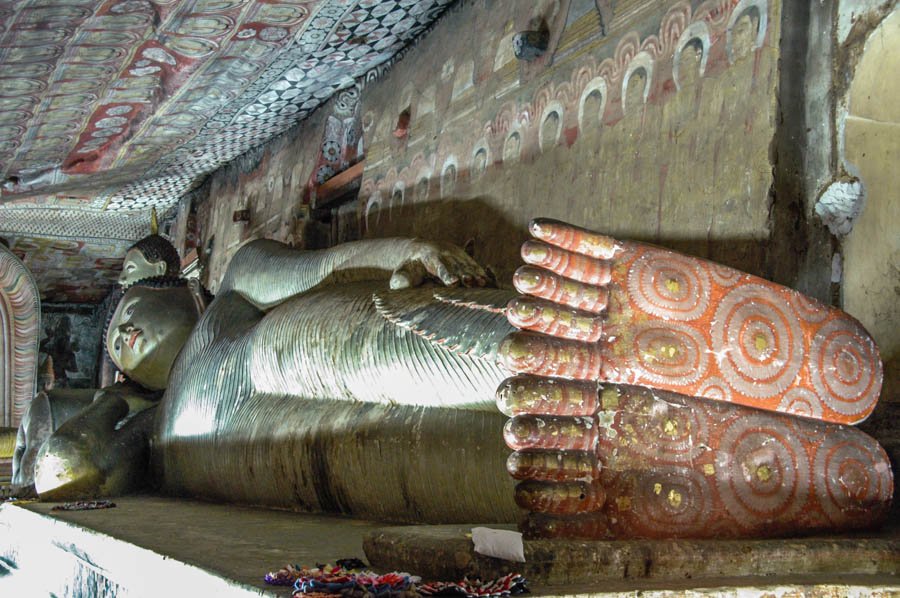
Nirvana and parinirvana were major elements in each cave temple, as I’ll demonstrate in pictures that follow. The following attributes of parinirvana were explained by our guide. The picture on the left illustrates the feet of the Buddha in parinirvana. The feet are are exactly one above the other in the nirvana pose. The picture on the right shows the flame above the Buddha’s head in nirvana. This is missing in parinirvana.


Characteristics of Parinirvana
- Eyes are half closed vs. open
- No flame above the head
- Open palm
- Empty (flat) stomach
- Feet slightly apart
Cave 4: Photography was banned for a time in recent history because a tourist sat on a Buddha statue to have her picture taken. You can see in this picture that this Buddha is more brightly painted than any other in this room. If you visit these sites, you must be respectful.The rule in the cave temples is that while you can take photos of the Buddhas, you cannot take photos of people. This prevents people from taking disrespectful photos of themselves or others with the Buddhas.
The Dambulla Cave temples are a magnificent artistic tribute to the Kandyan artists of the late 18th century, who brought the walls to vibrant life, especially in Maharaja Vihara or Cave 2, the largest of the cave temples. However, some of the surviving art goes back much earlier and has survived amazingly well.
2 thoughts on “Dambulla Cave Temples, Sri Lanka”
I found your site on technorati and read a few of your other posts. Keep up the good work. I just added your RSS feed to my Google News Reader. Looking forward to reading more from you.
Tom Humes
You have done an excellant job by taking very natural photographs and published in WEB with your views etc. pls try and spend your valuable time to find Lord Buddhas Path to Freedom
Budhu Saranai
Lalith Kodagoda
Dammam – KSA
Comments are closed.